
Analysis · France · UAE
The France–UAE Partnership: Power, Money and Diplomacy
How defence, trade, AI investment, food security and cultural diplomacy combine to make the France–UAE partnership a new model of geopolitical power.
 6 July 202610 min read
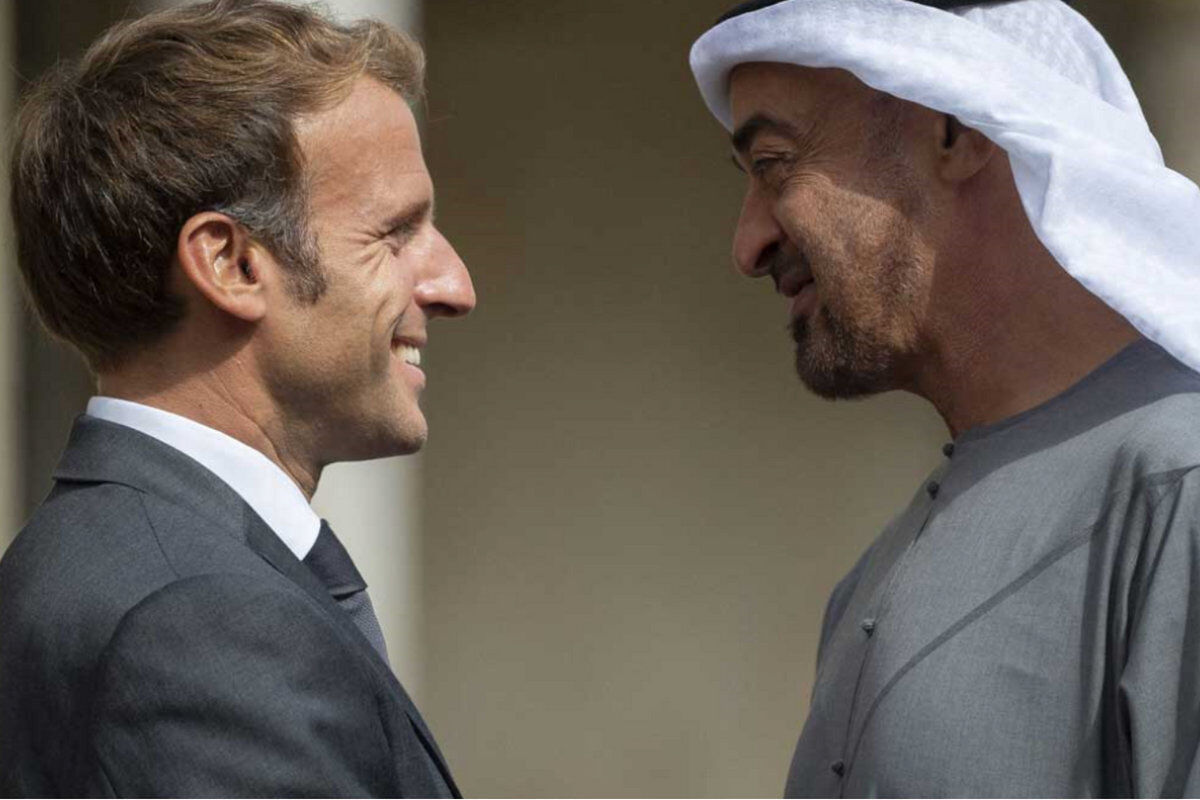
Relations between France and the United Arab Emirates rest on a strategic architecture far too layered to be read through trade volumes or defence contracts alone. This partnership is a new-generation power relationship in which the defence industry, military access, artificial intelligence, investment, agri-food security, cultural diplomacy and education are intertwined. For France, the United Arab Emirates means a military presence in the Gulf, a high-value-added export market, an investment partner and a sphere of cultural influence; for the United Arab Emirates, France is a key partner in diversifying its security, acquiring defence technology, opening a diplomatic channel to Europe and generating global prestige. The France–UAE relationship should therefore be seen less as a classic bilateral partnership between two countries than as a striking geopolitical model of how economics, security, technology and soft power operate together in the twenty-first century.
France and the United Arab Emirates
To treat the relationship between France and the United Arab Emirates merely as “trade between two countries” is to misread the true geopolitical depth of this partnership. For the rapprochement between Paris and Abu Dhabi is, beyond the figures, a multidimensional relationship that reflects the shifting power architecture of the twenty-first century.
On one side stands France, one of Europe’s historic powers, endowed with military, diplomatic and cultural capacity; on the other, the United Arab Emirates, which is seeking to convert its oil revenues into technology, defence, financial investment, cultural prestige and global visibility. At first glance there may seem to be no natural affinity between these two actors. France is a Europe-centred power; the UAE is one of the Gulf’s rising hubs of finance, energy, logistics and technology. Yet in geopolitics, geographical proximity is not always what is decisive. The real question is where the strategic needs of the two actors complement each other.
Today the France–UAE partnership derives its meaning precisely from this complementarity. France wants to deepen its military presence, economic influence and cultural reach in the Gulf. The UAE, for its part, is seeking to diversify its security partners rather than remain dependent solely on the United States, to build stronger diplomatic channels with Europe, to gain access to defence technology and to position itself as a global hub.
Seen in this light, the France–UAE relationship is not merely a commercial rapprochement. It is a multilayered power architecture shaped by the defence industry, military bases, investment in artificial intelligence, food security, cultural institutions, education networks and financial partnerships. The partnership shows that the Gulf now holds a place in the global system not only through its energy resources but also through the production of technology, capital, security and prestige.
Trade
The most visible dimension of the economic relationship between France and the UAE is trade. According to figures from the French Treasury Directorate-General (Direction générale du Trésor), trade in goods between the two countries rose from €7.4 billion in 2023 to €8.5 billion in 2024 and €10.8 billion in 2025. This growth shows that the economic ties between the two countries are not a passing rapprochement but are producing a steadily deepening interdependence. More striking than the volume of trade, however, is the asymmetric structure of the relationship, which is weighted in France’s favour. In 2025 French exports to the UAE reached €9.7 billion, while imports from the UAE remained at around €1.1–1.2 billion. This picture shows that France runs a substantial trade surplus with the UAE, and that the Emirati market has become a strategic export destination for the French economy.
At the heart of this relationship lie high-value-added sectors in particular. The aerospace industry occupies a decisive position in French exports to the UAE. The fact that French aerospace exports to the UAE reached €4.4 billion in 2025 shows that this field has become one of the backbones of the economic relationship between the two countries. Perfumes, cosmetics, textiles, leather goods and luxury consumer goods are further sectors underpinning France’s strong presence in the Emirati market.
Exports from the UAE to France, by contrast, consist mainly of refined petroleum products, hydrocarbons and metal products. The economic relationship between the two countries thus produces not a classic reciprocal trade but an asymmetric complementarity in which different areas of capacity are linked to one another. France offers technology, industry, brand value, defence production and cultural capital; the UAE provides energy, investment capacity, financial power and access to the Gulf market.
In this framework, trade is not merely the economic foundation of the relationship between the two countries. It also forms the infrastructure of a deeper strategic rapprochement. For in today’s world, trade is not simply a flow of goods and services. It is also an instrument through which political trust, technology transfer, diplomatic closeness and long-term geo-economic ties are built.
Artificial Intelligence and Investment
One of the most notable areas to have come to the fore in France–UAE relations recently is investment in artificial intelligence and advanced technology. The emergence in 2025, within the framework of Choose France, of a large-scale artificial intelligence campus project in the Paris region shows that the partnership between the two countries has moved beyond the classic axis of energy and defence. This project, whose first phase is reported to be worth €8.5 billion and is scheduled to come on stream from 2028, aims to bring UAE-based investment actors and the French technology ecosystem together on the same strategic ground.
This development should not be read as a mere investment move. Artificial intelligence, data centres, cloud infrastructure and chip technologies have become new elements of power in today’s international system. Where power relations between countries were once read chiefly through oil, natural gas, military bases and weapons systems, data infrastructure, algorithms, large language models and the capacity for digital sovereignty have now been added to the equation.
For the UAE, investment in artificial intelligence lies at the centre of its strategy of preparing for the post-oil era. Abu Dhabi does not want to remain merely a Gulf state enriched by hydrocarbon revenues. By converting its energy revenues into technology, financial networks, the defence industry, renewable energy and global investment vehicles, it is seeking to make itself one of the central actors of the new era.
For France, Emirati capital offers a significant opportunity in Europe’s quest for technological sovereignty. Paris does not want to find itself squeezed between the technology giants of the United States and China in the field of artificial intelligence. Gulf capital therefore represents for France not merely a source of finance but a strategic lever with which to strengthen Europe-based artificial intelligence capacity.
At this point the France–UAE partnership reveals the new logic of the technopolitical age. Power is no longer built solely in military bases or energy pipelines, but also in data centres, artificial intelligence campuses and digital infrastructure. The cooperation between Paris and Abu Dhabi is taking shape precisely within this new power architecture.
The Defence Industry
One of the most critical areas of France–UAE relations is the defence industry. This field constitutes the most concrete and most institutionalised dimension of the relationship of trust between the two countries. The fact that France maintains a military presence in the UAE clearly shows that this relationship is not confined to commercial defence contracts.
Al Dhafra air base, the Mina Zayed naval base and the army elements at Zayed Military City give France significant strategic access along the Gulf and Indian Ocean axis. For France, this military presence is no ordinary overseas-basing policy. Thanks to it, Paris gains a wider field of action across the Middle East, the Horn of Africa, the Indian Ocean and the Indo-Pacific.
This matters for France’s pursuit of a global role as well. Paris, which champions the discourse of strategic autonomy within Europe, uses its military presence in the Gulf to stake a broader geopolitical claim that is not limited to European security. The UAE, for its part, uses this military relationship to diversify its security partners and to seek to balance its US-centred security dependence.
For many years the UAE relied largely on the United States in defence and security. In recent years, however, Abu Dhabi has paid closer attention to the strategic risks of depending on a single great power. France therefore stands out for the UAE not merely as an arms supplier but as an important European partner that diversifies its security architecture.
One of the strongest symbols of this relationship is the Rafale agreement signed in 2021. This historic contract, under which the UAE agreed to purchase 80 Rafale F4 fighter jets from France, has been regarded as one of the greatest export successes of the French defence industry. Yet the agreement should not be seen merely as a sale of fighter aircraft. The Rafale deal is a symbol of the trust between France and the UAE, of their long-term defence partnership and of their mutual dependence in the field of security.
For France, the agreement demonstrates the global competitiveness of its defence industry and its claim to be a permanent actor in the Gulf. For the UAE, it is an important pillar of its strategy of modernising its air power, deepening its military capacity and diversifying its security partners.
The Quest for Localisation
One of the most important issues that will shape the future of the France–UAE defence relationship is the UAE’s drive to localise its defence industry. Abu Dhabi no longer wants to be merely a customer buying weapons from abroad. It wants to develop its own defence industry, obtain technology transfers, increase its domestic production capacity and turn its defence ecosystem into a domain of national power.
The rise of domestic defence companies such as EDGE is one of the clearest indicators of this transformation. The UAE is seeking to channel its financial power not only into imports but into building domestic capacity. For France, this creates both opportunity and risk.
The opportunity is clear. The UAE is a country that devotes vast resources to its defence industry, seeks to raise its technological capacity and is open to building long-term partnerships. That offers French defence companies a significant market and a basis for cooperation. But the risk is just as significant. The UAE’s demands for technology transfer and domestic production could, in the long run, limit the strategic advantage of French companies in the region.
The Missile Engineering Center opened by MBDA in Abu Dhabi is one of the most notable examples of this transformation. The centre shows that the defence relationship between France and the UAE is not confined to sales and maintenance but is expanding into engineering, technology and joint capacity development.
The UAE is thus no longer merely a market that buys French defence products. It is also an actor that wants to play a greater role in the maintenance, development and adaptation of these technologies, and perhaps in future in their production.
Agriculture and Food Security
Another area of France–UAE relations that is less visible than defence, trade and technology but is gaining ever greater importance is agriculture and food security. At first glance, food security may not appear as strategic as the defence industry or artificial intelligence. Yet climate change, drought, supply-chain crises and regional wars are making food one of the most critical security domains of the twenty-first century.
For the UAE, food security is a matter of national security in the most direct sense. A desert climate, limited farmland, scarce water resources and a high dependence on external supply make the country’s food security fragile. Abu Dhabi therefore treats food not merely as an economic question but as a matter of strategic resilience.
France, for its part, possesses one of Europe’s strongest agri-food capacities. Agricultural technology, food production, logistics, sustainable farming, research capacity and accumulated agricultural expertise make France a natural partner for the UAE. The fact that food security, agricultural research and partnership opportunities in third markets were explicitly placed on the agenda of the 2026 France–UAE Strategic Dialogue shows that this field is acquiring an increasingly institutional place in bilateral relations.
This heading also reveals that the France–UAE partnership is not shaped solely along the military and high-technology axis. Food security is an important area of cooperation in preparing for the crises of the future, diversifying supply chains and building strategic resilience.
For the UAE, France can be a reliable agri-food and technology partner. For France, the UAE can serve as a financial and logistical gateway to the markets of the Gulf and the Middle East. Agri-food cooperation therefore constitutes an area of partnership that is outwardly quiet but strategically deep.
Culture and Education
One of the most striking dimensions of France–UAE relations is also cooperation in cultural diplomacy and education. Two institutions stand out in particular here: the Louvre Abu Dhabi and Sorbonne University Abu Dhabi. The Louvre Abu Dhabi is not just a museum. It is one of the most powerful symbols of French cultural diplomacy in the Gulf. For France, the institution offers the possibility of establishing a long-term sphere of influence through art, history and cultural heritage. For the UAE, the Louvre Abu Dhabi is part of the country’s desire to define itself not only through oil, finance and construction projects but also through culture, art and global prestige.
Here culture becomes a geopolitical instrument. A museum ceases to be merely a space where works of art are displayed and becomes a symbol of how countries wish to present themselves to the world. It is precisely in this sense that the Louvre Abu Dhabi sits at the centre of the soft-power architecture built between France and the UAE. Sorbonne University Abu Dhabi carries a similar strategic meaning. Transplanting the French academic tradition to Abu Dhabi ensures that France’s influence in the UAE is not confined to state-to-state relations. A longer-term sphere of cultural and intellectual influence is taking shape, reaching new generations through education. The fact that thousands of pupils in UAE state schools are learning French, and that the network of French schools in the country is growing, is another indicator of this cultural influence. For France, these institutions represent a lasting cultural presence in the Gulf. For the UAE, they generate global visibility, an image of modernisation and international prestige.
In the France–UAE partnership, therefore, culture and education do not add merely symbolic value to the relationship. On the contrary, they operate as some of the quietest but most effective instruments for generating long-term influence, shaping elites and fostering diplomatic closeness.
A Multidirectional Foreign Policy and the Limits of the Partnership
The relationship between France and the UAE is strong and multilayered. Yet it would be misleading to regard this partnership as an entirely frictionless or unbounded strategic rapprochement. For in recent years the UAE has pursued a multidirectional and flexible foreign policy. Abu Dhabi is simultaneously developing relations in different fields with the United States, China, India, Türkiye, Israel, Russia and the countries of Europe.
This multi-vector foreign policy gives the UAE considerable room for manoeuvre. Rather than remaining dependent on a single great power, the UAE seeks to derive different strategic benefits from different actors. The United States offers a security umbrella; China, economic and technological links; India, trade and diaspora ties; Israel, technology and security cooperation; Türkiye, regional balance and economic partnership; and France, defence technology, cultural prestige and a diplomatic channel to Europe.
This picture creates both opportunity and limitation for France. Through the UAE, France can establish a strong military, economic and cultural presence in the Gulf. But the diversity of the UAE’s foreign policy means that France’s influence over the country will never become absolute. Moreover, the question of technology transfer and localisation in the defence industry will remain a delicate subject of negotiation between the two sides in the period ahead. France will want to protect its strategic technologies; the UAE will demand more domestic capacity, engineering know-how and production capability. The France–UAE relationship is therefore a process that must be managed with care.
Conclusion
The relationship between France and the United Arab Emirates is one of the most striking examples of how the concept of power is being redefined in contemporary geopolitics. It would be wrong to explain this relationship simply as “France sells products to the UAE” or “the UAE invests in France”. There is a deeper, more multilayered structure at work here.
The defence industry establishes the security bond between the two countries. Trade converts that bond into economic gain. Artificial intelligence and investment partnerships carry the relationship into the new arenas of competition of the technopolitical age. Food security produces strategic resilience against climate and supply-chain crises. Culture and education, in turn, give the partnership a long-term soft-power dimension. For France, the UAE is military access in the Gulf, an export market, an investment partner and a sphere of cultural influence. For the UAE, France is defence technology, security diversification, a diplomatic channel to Europe and a source of global prestige. France–UAE relations are therefore not merely an economic or diplomatic rapprochement between two countries in the classic sense. This partnership offers a new geopolitical model in which economics, security, technology, culture and food security are intertwined.
In short, the relationship between France and the UAE shows us this: in the twenty-first century, power is no longer measured solely in tanks, aircraft, military bases or barrels of oil. Power is also built through museums, universities, data centres, artificial intelligence campuses, food chains, technology partnerships and strategic flows of capital. The partnership between Paris and Abu Dhabi is one of the most striking examples of this new age of power in the Gulf.
Sources:
Official Institutional Sources
Direction générale du Trésor. (2026, 8 June). “Les échanges commerciaux UAE-France.” Ministère de l’Économie, des Finances et de la Souveraineté industrielle et numérique.
Direction générale du Trésor. (2025, 23 May). “Choose France 2025: le Golfe investit, la France affirme son rang.” Ministère de l’Économie, des Finances et de la Souveraineté industrielle et numérique.
Ministry of Foreign Affairs of the United Arab Emirates. (2026, 6 May). “UAE-France Strategic Dialogue Reaffirms Commitment to Advancing Shared Priorities.” UAE Ministry of Foreign Affairs.
Ministry of Foreign Affairs of the United Arab Emirates. “National Food Security Strategy 2051.” The Official Portal of the UAE Government.
News and Current Sources
Dassault Aviation. (2021, 3 December). “Historical Contract for the Acquisition of 80 Rafale F4 by the United Arab Emirates.” Dassault Aviation – Press Release.
MBDA. (2025, 18 November). “Tawazun Council for Defence Enablement and MBDA Announce Strategic Projects to Support Localisation of Defence Technology.” MBDA – Press Release.
Reuters. (2025, 6 February). “France, UAE Agree to Develop 1 Gigawatt AI Data Centre.” Reuters.
Reuters. (2024, 21 May). “France Open to UAE Investments in Nuclear Industry, Minister Says.” Reuters.
Reuters. (2026, 1 June). “Major Investment Pledges at Choose France Summit.” Reuters.
Le Monde. (2025, 19 May). “Intelligence artificielle: le français Mistral AI et le fonds émirati MGX associés dans un projet de data center géant.” Le Monde.
Le Monde. (2024, 6 September). “French Military Equipment Exports Down Sharply in 2023.” Le Monde.
Le Monde. (2024, 10 January). “France’s Defense Industry Threatened by New Competitors.” Le Monde.