
Analysis · Türkiye · Iran
Türkiye–Iran: A Strategic Balance Between Cooperation and Rivalry
An analysis of the fragile strategic balance between cooperation and rivalry in Türkiye–Iran relations after Hakan Fidan’s visit to Tehran.
 6 July 20264 min read
Regional tensions in the Middle East have intensified in recent months. Iran has been the target of repeated Israeli strikes. In parallel, the United States launched a military operation code-named “Operation Midnight Hammer”, using B-2 stealth bombers to strike several nuclear facilities in Iran. Over the same period, Israel has extended its influence in several key areas of Syria through the military support it provides to Druze and Kurdish groups. At the same time, Israeli strikes against Hezbollah in southern Lebanon have weakened the Shia axis in the region and increased the pressure on Iran’s regional influence.
From Türkiye’s perspective, the fall of the Syrian regime in December 2024 gave Ankara the opportunity to expand its sphere of influence in Syria. While positioning itself as a central actor in the preservation of Syria’s territorial integrity, Türkiye categorically rejects any attempt to establish an autonomous state in Syria. Ankara aims to dismantle the Syrian Democratic Forces and to encourage their integration into the Syrian army. In this context, Israel is believed to be seeking to establish a line of influence, sometimes referred to as the “David Corridor”, linking the Druze areas of southern Syria to the territories controlled by the Syrian Democratic Forces in the north, with the aim of limiting Türkiye’s influence in the region.
Historical rivals on the geopolitical chessboard of the Middle East, Türkiye and Iran find themselves confronted with common challenges. At the same time, Ankara and Tehran lend strong support to the Palestinian cause in the face of Israeli attacks that both describe as genocide. Most recently, the latest meeting between Recep Tayyip Erdoğan and Donald Trump has revived the debate over reducing Türkiye’s dependence on Russian oil, adding an energy dimension to this geopolitical realignment.
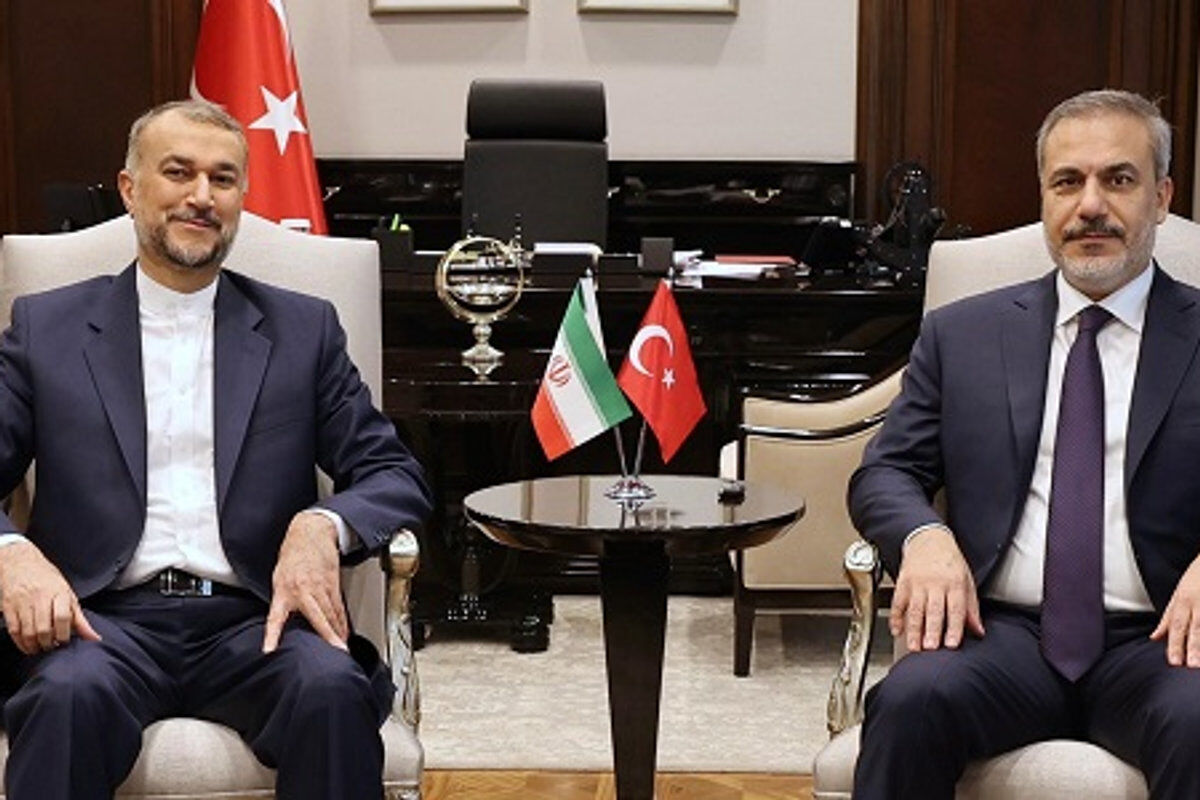
It is against this geopolitical backdrop that Turkish Foreign Minister Hakan Fidan made a working visit to Tehran on 30 November 2025 to meet his Iranian counterpart, Abbas Araghchi. Fidan’s fourth visit to Tehran as foreign minister, the trip was seen as part of a shared determination to “strengthen strategic cooperation” between Türkiye and Iran at both the bilateral and regional levels.
The two ministers stressed the importance of removing the persistent obstacles to trade. Chief among these are customs tariffs, the sanctions affecting Iran and the lack of modern logistics infrastructure. To address these priorities, the parties agreed to convene the High-Level Cooperation Council and the Joint Economic Commission in the near future. Iran presented itself as a “reliable energy supplier” for Türkiye, expressing its wish to renew the natural gas contract due to expire in 2026 and to step up cooperation in the electricity sector. Aware that their trade potential remains under-exploited, the two countries now aim to reach an ambitious target of 30 billion dollars in trade volume.
Several projects aimed at strengthening connectivity were also on the agenda. These include the construction of a key railway line along the Cheshmeh Soraya–Aralık corridor, a strategic rail link between north-western Iran and Türkiye’s eastern border region. The project is intended to make the transit of goods between Central Asia and Europe via Türkiye more fluid. The opening of a new border crossing was also discussed. Iran’s recent announcement that it will shortly open a consulate in Van is likewise seen as part of this rapprochement and of the effort to accelerate trade flows. Hakan Fidan said he would attend the consulate’s opening.
The situation in the Middle East occupied a central place in the talks. Displaying a rare convergence on the Israeli-Palestinian conflict, Ankara and Tehran described Israel as the main threat to regional stability and condemned its attacks in Gaza, Syria and Lebanon. The two ministers called on the international community to act to end what they described as the “genocide” being committed against the Palestinians. On Syria, Ankara and Tehran reaffirmed their commitment to Syria’s territorial integrity and stressed that the country’s stability must be shielded from any foreign interference.
The visit also served to address the Caucasus file and to strengthen security cooperation between Türkiye and Iran. Rejecting foreign interference in this already fragile region, the two ministers stressed that stability there can only be preserved through regional dialogue. This shared position is intended to prevent new rivalries from being imported into the region, particularly in the wake of the recent geopolitical upheavals in the South Caucasus. The parties also reiterated their determination to cooperate in the fight against terrorism, which they identified as a common threat. Iran voiced its support for Türkiye’s initiatives against the PKK, welcoming the progress made in the disarmament process and the goal of a Türkiye free of terrorism.
While the diplomatic language may appear conciliatory, numerous fault lines persist between Ankara and Tehran. A NATO member and strategic ally of Azerbaijan, Türkiye maintains close ties with Baku under the banner of “one nation, two states”, a formula frequently invoked in official discourse, yet it is at odds with Iran over the Zangezur Corridor project. Tehran regards the project as a direct threat to its security and to its access to the Caucasus. This tension was already apparent during the 44-Day War between Azerbaijan and Armenia in 2020, when Iran held military exercises on its northern border as a sign of its distrust of the Azerbaijani advances backed by Ankara.
The competition for influence in Iraq also remains very much alive. Türkiye maintains close relations with the Kurdistan Regional Government, dominated by the Barzani family, while Iran backs a range of Shia militias, among them the Hashd al-Shaabi. On the Syrian file, too, Türkiye and Iran have supported opposing camps since the uprising began in 2011: Iran stood by Bashar al-Assad’s regime, while Türkiye backed various opposition groups, foremost among them the Syrian National Army.
In conclusion, Hakan Fidan’s visit to Tehran revealed a shared determination to revive strategic cooperation in a fragile regional environment. Although the display of convergence on sensitive issues such as Gaza, the fight against the PKK and energy cooperation signals a significant change of course, the real impact of these commitments will depend on their implementation, given the disputes that persist. This cooperative dynamic, moreover, does not mask the ambivalent nature of the relationship. Ankara and Tehran remain locked in a competition for influence in arenas such as the Caucasus, Syria and Iraq. In these regions, the two countries’ strategic interests more often than not diverge. While both share the will to stabilise their borders, they defend distinct and at times incompatible geopolitical visions. In this sense, Fidan’s visit points less to a solid alliance than to a pragmatism of necessity, shaped by circumstance and by the imperatives of the moment. It is precisely within this dialectic between tactical cooperation and structural rivalry that the uncertain future of Turkish-Iranian relations is taking shape.
This article was first published in French on 19 September 2025 on Eurasiapeace. It was translated from the original into Turkish by Eren Gökdemir.