
Analysis · France · Syria
A New Era in Franco-Syrian Relations: Historical Memory, Reconstruction and Regional Rivalry
How Macron’s Damascus visit marks France’s return to Syria through mandate memory, reconstruction, energy and regional rivalry.
 13 July 20267 min read
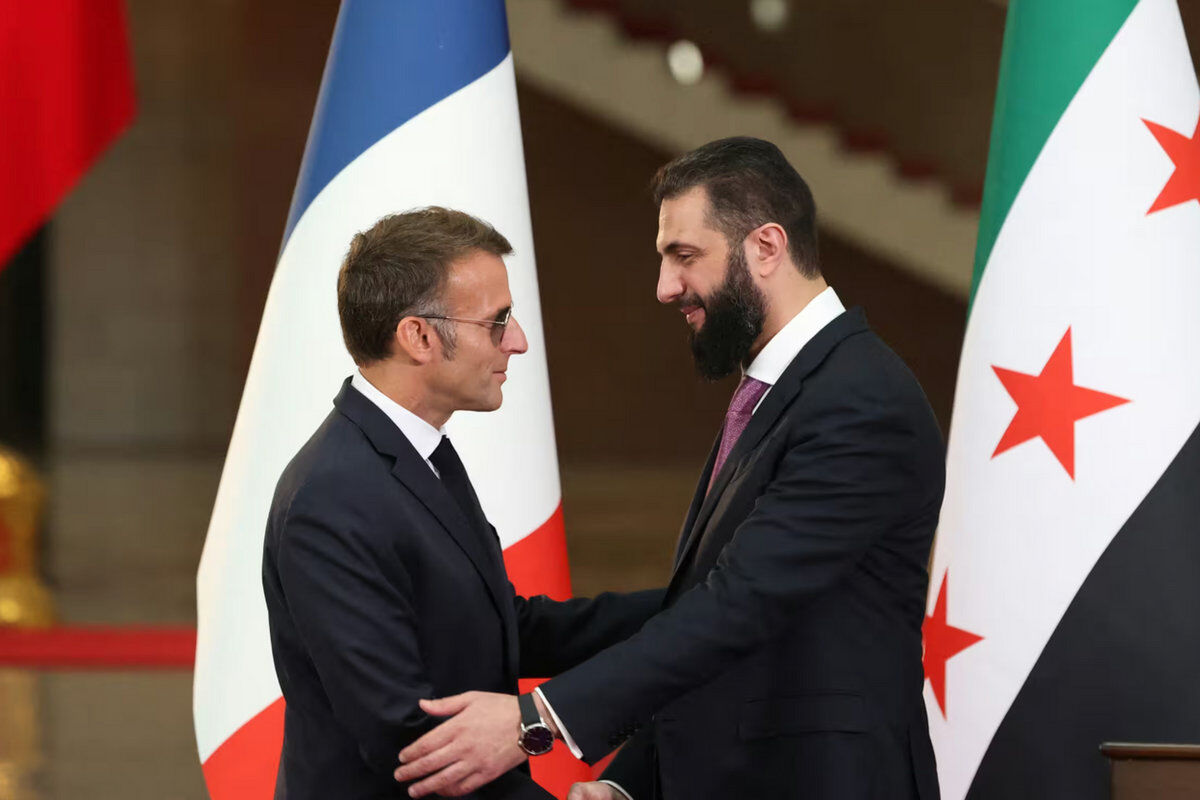
“Nothing will suppress the Syrian people’s desire to live in a fully sovereign, safe, pluralistic and united Syria.” Emmanuel Macron, 7 July 2026.
This statement by the French President on X made clear that his 6–7 July visit to Syria, which came just before the NATO summit, was no mere diplomatic courtesy call.
By travelling to Damascus roughly a year and seven months after the fall of Bashar al-Assad’s regime on 8 December 2024, Emmanuel Macron became the first head of state from a European Union member state to visit the country in the new Syrian era. At the same time, the visit meant the re-establishment of relations between France and Syria some 14 years after the diplomatic rupture that had lasted since 2012.
Macron’s meetings in Damascus also laid bare the multidimensional nature of this return. His talks with Ahmed al-Sharaa’s government went beyond the re-establishment of diplomatic relations to cover Syria’s political transition, the protection of minorities, the territorial integrity of Syria and its neighbours, reconstruction projects and security cooperation. The delegation of French business leaders accompanying the visit, for its part, underlined the economic weight of these contacts.
In particular, the emphasis Macron placed in his statements on protecting the rights of minorities and on Christian schools showed how alive the memory of France’s Syrian mandate remains.
So is Macron’s visit to Damascus really nothing more than a diplomatic normalisation? Or is France trying to expand its influence in the region by returning to the Syrian arena it shaped as a mandatory power a century ago, this time through reconstruction, energy, security and the question of minorities?
The Historical Memory of Franco-Syrian Relations
With the withdrawal of the Ottoman Empire from the region at the end of the First World War, Syria and the wider Levant became the centre of a new division of power. Under the Sykes–Picot agreement concluded at the San Remo conference on 24 April 1920, the administration of Syrian territory was handed over to the French.
To halt the rise of Arab nationalism in a Syria whose population was overwhelmingly Sunni and Arab, the French mandatory authorities set about dividing the country. As a result, the French mandate administration reorganised society along regional and sectarian lines. Distinct administrative structures were created: Damascus, Aleppo, the Alawite State, Jabal al-Druze, Greater Lebanon and the Sanjak of Alexandretta. This fragmented arrangement was designed to produce a more easily governable political space in place of a centralised, unitary Syria. Le Monde has stressed that the French mandate period left a lasting historical imprint on Syria’s debates over pluralism and the central state.
Macron’s 2026 visit to Damascus therefore cannot be explained by current diplomacy alone. France is returning to a territory it shaped as a mandatory power a century ago, this time with a discourse of reconstruction, investment, security and diplomacy.
Post-Assad Syria
The fall of Bashar al-Assad’s regime on 8 December 2024 was not only a change of power for Syria; it was also the beginning of the country’s emergence from years of embargoes. Once Ahmed al-Sharaa took charge of the transitional government, Damascus sought both to rebuild state authority at home and to normalise its relations with the outside world. In the course of this process, the European Union lifted most of its economic sanctions on Syria in 2025. Then Ahmed al-Sharaa was received by Emmanuel Macron in Paris on 7 May 2025, and the Élysée declared at that meeting that France supported a “free, stable, pluralistic and sovereign” Syria.
This normalisation was not confined to Europe. Most of the United States’ sectoral sanctions were lifted by Donald Trump’s executive order of 30 June 2025. Syria, for its part, reconnected with the Western security architecture by joining the political platforms of the International Coalition against Daesh on 10 November 2025. European Commission President Ursula von der Leyen’s trip to Damascus on 9 January 2026, where she announced roughly €620 million in support for the 2026–2027 period, also accelerated Syria’s return to the international system. Moreover, Türkiye, under the leadership of President Recep Tayyip Erdoğan, played an important role in the process of bringing Syria back into the international system.
The agreements reached as a result of Macron’s visit on 6–7 July should be assessed in this light. In other words, all these developments show that post-Assad Syria is not merely a country trying to rebuild its state at home, but has become an actor seeking to reopen itself to the outside world.
The Economic Dimension
The most tangible dimension of the visit is economic. After fourteen years of war, Syria faces a colossal need for reconstruction. The World Bank puts the cost of rebuilding Syria at €185 billion. Syria’s reconstruction is therefore not only a humanitarian matter but also a major arena of economic competition. Ports, airports, energy pipelines, electricity grids, water infrastructure, the banking system and transport corridors are the strategic files that will determine which actors hold sway in the new Syria.
Along these lines, Patrick Pouyanné, the chief executive of TotalEnergies, said that Syria could become “an important transit country” for oil flowing from Iraq to the Mediterranean via the Kirkuk–Baniyas pipeline, and that alternative routes to the Strait of Hormuz could be offered. The statement shows that France sees Syria not only as a reconstruction market but also as an energy and logistics corridor.
As for the logistics dimension of the visit, the French shipping and logistics giant CMA CGM signed a partnership agreement with Syria covering air cargo operations at Damascus International Airport and two dry port projects. The company’s presence in Syria is nothing new. On 1 May 2025, CMA CGM signed a 30-year, €230 million agreement to manage and expand the Port of Latakia. The Syrian origins of Rodolphe Saadé’s family further add to CMA CGM’s symbolic weight in the Syrian file. In the same period, France and Syria also took steps towards the return to Syria of some €51 million in assets seized in France and reported to belong to Rifaat al-Assad.
The economic opening was not limited to ports and energy. Syria’s telecommunications minister, Abdulsalam Haykal, noting that an opportunity had arisen for the first time to explore long-term partnerships between France and Syria, said he wanted to turn his country into a technological “crossroads” in the Middle East. This ambition appears to signal a search for cooperation with France, particularly in artificial intelligence and digital infrastructure.
Macron’s visit to Damascus thus aims, beyond conventional reconstruction projects, to give France a say in post-Assad Syria by establishing a presence in fields such as energy, logistics, ports, air cargo, digital infrastructure and technology.
Security, Politics and Culture
The explosions that hit Damascus during Macron’s visit showed that the security environment in Syria remains fragile. Two blasts went off near the Four Seasons Hotel and left at least 18 people injured; Macron was unaffected by the attacks and continued his talks with Ahmed al-Sharaa.
Security is of central importance to France. From Paris’s perspective, instability in Syria is not merely a regional crisis: the Daesh threat, migration, radicalisation, Lebanon and the territories occupied by Israel bear directly on European security as well.
At the political level, Macron’s core message was a “sovereign, safe, pluralistic and united Syria”. AP reported that in his statement on X, Macron said the Syrian people’s desire for such a Syria could not be suppressed. According to the same report, Macron and Ahmed al-Sharaa also agreed to reappoint ambassadors after a rupture of more than a decade.
The cultural dimension is also an important part of the visit. Macron announced the process of returning 23 historical artefacts to Syria. Nor was the visit confined to the return of archaeological objects. He pledged to support the reopening of the French Institute of the Near East in Damascus and the resumption of activity at Christian schools.
Why Now?
Macron’s visit to Damascus should not be assessed solely in terms of Franco-Syrian relations. The fact that he was to move straight from his Damascus meetings to the NATO summit in Ankara means the visit can also be read in terms of transatlantic security balances and regional diplomacy. With this move, Macron signalled ahead of the NATO summit that France intends to follow a Gaullist line on the Syrian file, independent of the United States and of the decisive actors on the ground. At the same time, Paris showed that it wants to take a leading role on Syria on Europe’s behalf and not be left in the background of the new Syrian equation.
For the Syrian arena is no longer merely a domestic matter for Damascus; it is a new field of regional competition in which actors such as Türkiye, Qatar, Saudi Arabia, the United States, Russia, China and Israel are staking out positions. For Türkiye, Syria is of vital importance because of its unitary structure, the PKK/YPG question, the return of refugees and the relations to be built with the new government in Damascus. France’s position on the Syrian Democratic Forces and other minorities will therefore be watched closely by Ankara.
For Qatar and Saudi Arabia, Syria has become an important arena for reconstruction investment and regional influence. It is noted that the new Syrian government is seeking above all to attract Gulf capital, and that Gulf states have announced investments in Syria. For Israel, Syria is bound up with the Golan Heights, Iranian-backed militias, Hezbollah and the security balance in the south of the country. For Russia, Syria is an old sphere of influence inherited from the Assad era. China, meanwhile, follows Syria less with a view to direct military involvement than in terms of infrastructure, investment and long-term economic access.
In short, Türkiye is strong on the ground, Gulf capital is active, the United States is influential in the process of easing sanctions, Russia is trying to preserve its old influence, and China is watching for long-term economic opportunities. France, for its part, does not want to be left away from the table in this new equation.
Macron’s visit to Damascus should therefore be read not only as support for the new Syrian government but also as a strategic signal to Washington, Ankara and the other actors with influence in the region.
Conclusion / My Assessment
Macron’s visit to Damascus shows that France has made a late but ambitious return to the Syrian arena. Paris may not have entered the new post-Assad Syrian equation as quickly as the actors on the ground at the outset, but with this visit it has attempted to stake out a strong position by deploying diplomacy, the economy, culture, energy, logistics and security all at once.
France’s emphasis on a “pluralistic Syria” is striking in this respect. At first glance this rhetoric appears positive from the standpoint of protecting minorities and ensuring an inclusive transition, but read within the frame of historical memory, it can also be seen as a new, 21st-century reflection of the approach to regional and social engineering inherited from the French mandate period. Paris’s decision to put French cultural institutions, Christian schools and the protection of Eastern Christians back on the agenda likewise shows that France wants to build not only a diplomatic but also a cultural and historical sphere of influence in Syria.
In economic terms, the visit’s core message is far clearer: France does not want to be an ordinary actor in Syria’s reconstruction. CMA CGM’s investments in the Port of Latakia, the geographical proximity between Marseille and the Syrian coast, the prospect of the Kirkuk–Baniyas pipeline and the view of Syria as an energy transit country capable of carrying Iraqi oil to the Mediterranean all reveal Paris’s desire to turn Syria into a future energy and logistics hub. Seen in this light, France’s Syria policy is not merely an attempt to revive relations with Damascus; it can also be read as part of a search for energy and logistics routes that could serve Europe as an alternative to Türkiye.
This point is particularly important for Türkiye. Ankara has long sought to position itself as an indispensable hub for energy corridors, logistics lines and regional connectivity routes. France’s contemplation of new energy and logistics lines opening onto the Mediterranean via Syria indirectly raises the possibility of an alternative to Türkiye’s central position. Likewise, while Ankara stresses the preservation of Syria’s unitary structure, France’s promotion of a pluralistic, minority-based political order shows that the two countries hold different priorities for Syria’s future. The common position that France has developed in the Aegean and the Eastern Mediterranean with Greece, the Greek Cypriot Administration of Southern Cyprus and the European Union should also be taken into account in this context. For the energy and logistics calculations taking shape via Syria are not confined to Damascus; they are part of a broader regional rivalry that directly concerns Türkiye’s geopolitical position in the Eastern Mediterranean.
The difference in approach between the United States and France is another important dimension of this visit. While Washington wants the new Syrian government to take a more active role against Hezbollah in Lebanon, Macron stressed in his talks that Lebanon’s sovereignty must be respected. This divergence shows that France still reads the Syrian and Lebanese files through its historical Levant policy. In other words, even if the legacy of the French mandate is not returning today in the same direct form, it is being brought back to life with different instruments within the new geopolitical balances of the 21st century.
In sum, Macron’s visit to Damascus should be read as an attempt by France to turn Syria’s security, infrastructure, energy and reconstruction needs to its own advantage in its Middle East policy. Beyond offering Syria humanitarian aid or diplomatic support, Paris wants to secure a strategic position in the country’s rebuilding process.
Yet it should not be forgotten that today’s world is no longer unipolar, nor does it resemble the conditions of the old mandate era. In a multipolar international order, the weight of regional powers has grown. Syria’s options are not limited to France. Türkiye, Qatar, Saudi Arabia, the United States, China and other actors also want a place in the new Syrian equation. This not only leaves the government in Damascus exposed to external pressures; it also gives it the opportunity to bargain between actors and to generate alternatives.
Macron’s visit therefore demonstrates France’s return to Syria, but it demonstrates just as much that Syria is no longer at the mercy of a single external actor. If the new Syria can strike the right balance, it can cease to be an arena of competition for outside powers and instead turn that competition to the advantage of its own reconstruction and state-building. That is the crux of the matter: France has returned to Damascus, but this time Syria faces not a single mandatory power but the multiple options of a multipolar world.